Room for cream?

Rebecca Michelle's avatarBy Rebecca Michelle

I’ve always taken my coffee black. I started drinking coffee in college, not because I needed the caffeine but because getting a cup of coffee was often more convenient than getting a meal. I didn’t start having coffee in the morning until my second year teaching, actually, and even then it was more for the taste. My mum used to make her coffee with a bit of milk and a bit of brown sugar, but my dad never did. Mum stopped drinking coffee when I was 14 (long story that involves a bad cup of joe on an airplane) so my dad was my role model. Nowadays, I like to think that I drink coffee for the taste, but I do find myself with a headache around noon if I skip a morning cup. Addicted? Yes, I’d say so.

This afternoon I went to Pour Coffee Parlor with a book. I…

View original post 63 more words

Streamer Coffee Company opens another outlet.

Coffee Drinkers Make Better Lovers's avatarCoffee Drinkers Make Better Lovers

Last Sunday, Sonia went to Streamer Coffee Company’s new outlet, Streamer Coffee Company Gohongi, with a friend. We visited the Shibuya outlet during our Tokyo Coffee Trail and left impressed.

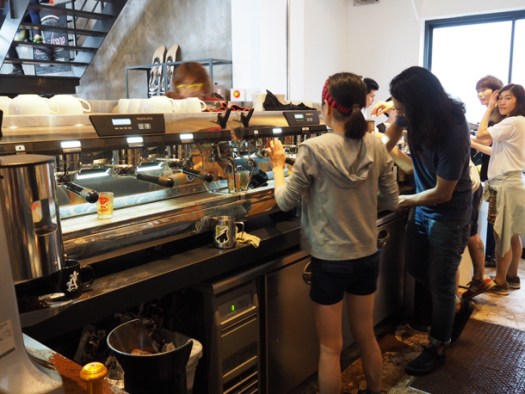
Nuova Simonelli unveils its longest ever espresso machine here: the Aurelia II T3 has an astounding 6 group-heads. Custom built for Streamer Coffee Company, the machine allows for 12 cups of espresso to be pulled simultaneously. I wonder how the baristas can pull off such a stunt.

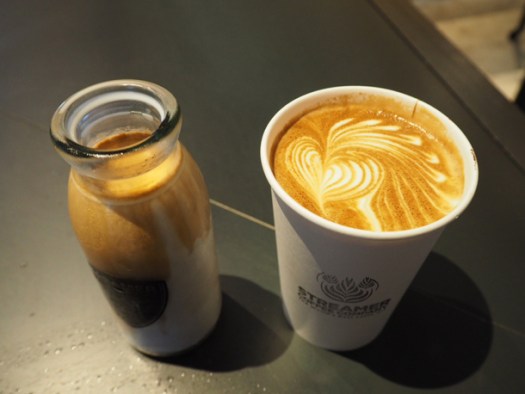
Hiroshi Sawada is the 2008 Free Pour Latte Art Champion. He opened Streamer Coffee Company in 2010; as expected, the latte art fails to disappoint.

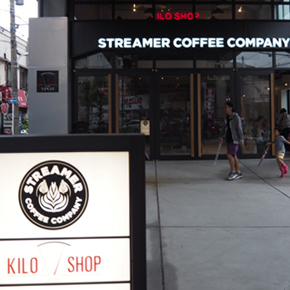
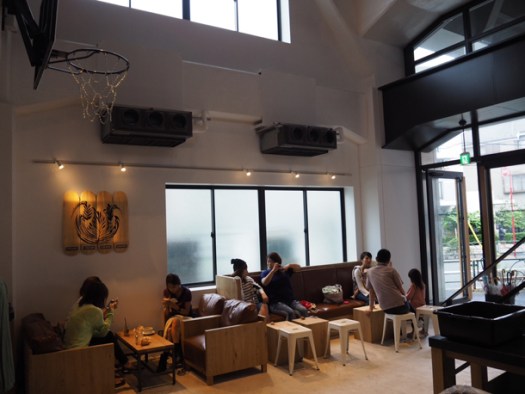
OLYMPUS DIGITAL CAMERA Streamer Coffee Company facade

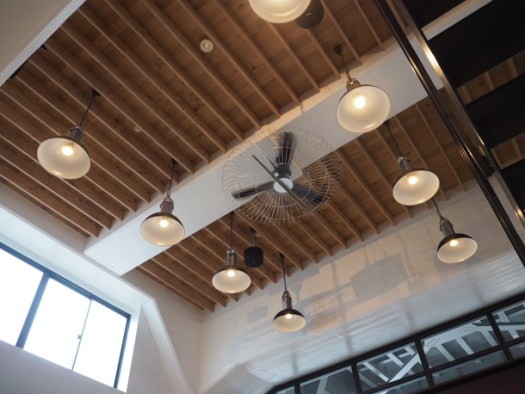
OLYMPUS DIGITAL CAMERA Check out the ceiling fan with grills.

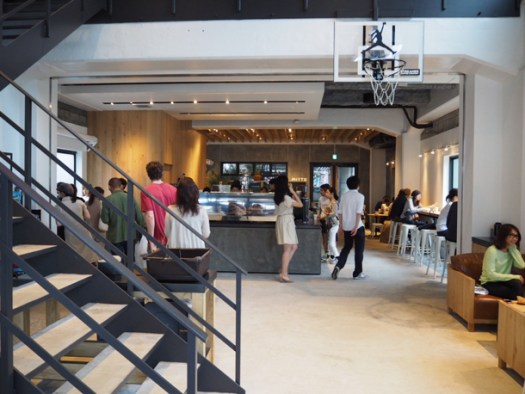
OLYMPUS DIGITAL CAMERA A monster lurks in the background. Can you spot it?

OLYMPUS DIGITAL CAMERA Here it is: check out the massive Nuova Simonelli espresso machine. Size matters!

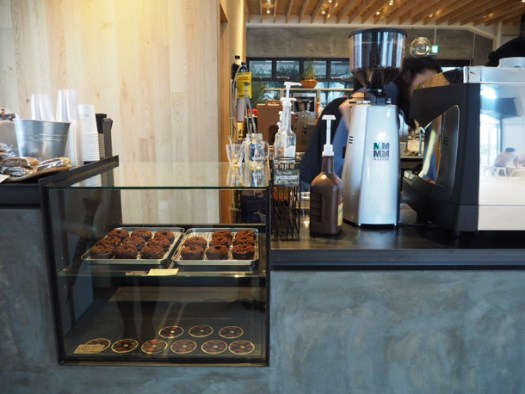
OLYMPUS DIGITAL CAMERA The donuts look tantalizing but Sonia resisted ordering them.

OLYMPUS DIGITAL CAMERA Their orders.

OLYMPUS DIGITAL CAMERA The…

View original post 36 more words

Mcdonalds adds new cold coffee for summer

McDonald’s Restaurants In Southern California added a new frappe drink to its cafe menu.
In fact, they will launch the Horchata Frappe with a buy-get-one-free campaign.
The Frappe contains vanilla, a hint of cinnamon and coffee, and topped with whip cream and caramel drizzle.
“The addition of Horchata Frappes to the menu reinforces McDonald’s as a one-stop destination for a variety of great tasting quality beverages at a convenience and value that only McDonald’s can offer,” said Clay Paschen, III, McDonald’s owner/operator and president of the McDonald’s Operators’ Association of Southern California (MOASC).

McDonalds added: “Starting Monday, May 12, from 2-5 p.m., customers can buy-one McCafe beverage and get a second one free.”

JABLUM taking local marketshare with cafés

Jablum the largest supplier of jamaica blue mountain globally is quietly capturing a completely new market—JAMAICA!

Locals know very little of coffee –thinking instant coffee is luxury. SERIOUSLY.

It’s based on a historical plantation economy of exporting quality products including coffee at higher price and re importing same cheaper commodity products.

But the local coffee market is percolating with 10
Cafés opened in 12 months in Kingston Jamaica within a stalled economy .

The legions of new cafés need coffee to satisfy the newly caffeinated middle class.

Thus, Jablum forged partnerships with three cafés in Kingston. The first is a #jablum branded cafe at the Kingston based Norman Manley International Airport and a secondly a hotel cafe (Spanish Court Cafe). The third partnership relates to supplying the second largest coffee chain CANNONBALL. That partnership was forged by a family takeover of Jablum’s factory and farm since last year. That family happens to own cannonball via marriage.

It has resulted in prominent displays of JABLUM GOLD sharing shelf space with the diva of jamaica blue mountain coffee TWYMANS.

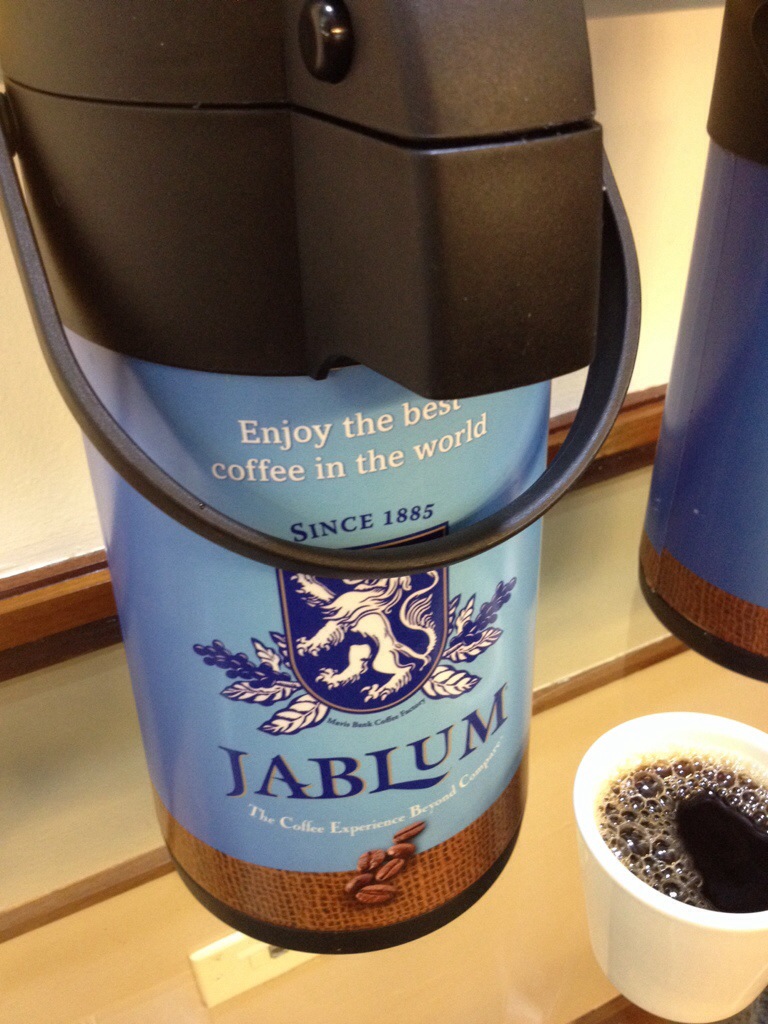
Jablum seems to also realise that dispensers can create virtual cafés without fixed costs. It’s yet to put them in myriad of places but we’ve seen a recent one in an. Affiliated company’s head office–insurance giant Sagicor.

Historically, Jablum realised the local market could be infused decade ago when NESTLEset up a series of sweet based instant coffee drink machines across the country—-French vanilla extra sweet. An instant hit (lol).

Jablum tried its own dispensers based on brewed coffee which flopped. It wasn’t sweet.

About two years later it launched a sweet coffee drink to compete against Starbucks chilled drinks. That’s flopped also possibly lacking the cool factor.
This time however it seems jablum will make headway locally.

20140326-084221.jpg

Starbucks sold 3 billion cups of coffee in 1 yr

Global coffee chain Starbucks sold more cups of coffee than people in China, the Americas and Africa combined.
Comparing people with coffee is sort of apples and oranges. But it highlights why coffee is the 2nd most traded global commodity behind oil. Oil made Rockefeller mega wealthy and it’s the same for Starbucks chairman, president and CEO Howard Schultz.
The chain which started in ’71 recorded its most successful year in 2013 “with $15 billion in revenue and an average sale of $5” according to a March 2014 release about the annual general meeting.
That equates to a very rough estimate of 3bn cups of coffee (Of course starbucks sells more than coffee but that’s its core).
Starbucks made $2.5 billion in net operating income (23 percent growth) in fiscal 2013;
55 percent total shareholder return in fiscal 2013, following a 38 percent return in fiscal 2012 and a 46 percent return in fiscal 2011.
Schultz also spoke of plans to vertically incorporate it’s recently acquired 240 hectare farm in Costa Rica which reaped first harvest under the conglomerate’s ownership.
“The equity of the Starbucks brand has been built by the experience, which comes to life through our partners and the relationships they have with our customers,” Schultz said.

20140322-194756.jpg

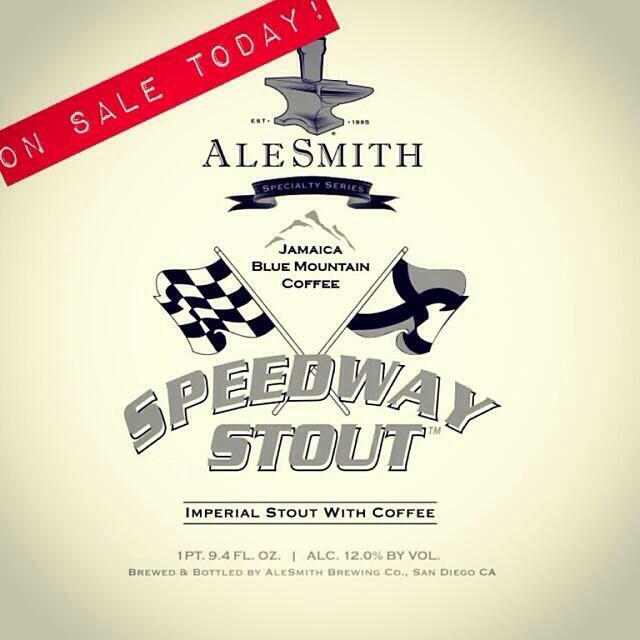
Jamaica Blue Mountain Stout

US based AleSmith Brewing Company and Mostra Coffee launched
‘Jamaica Blue Mountain Speedway Stout’ since March.

Since its launch online fans have been mostly supportive but some question the use of high quality coffee as a “quirk”.

The team will source beans from Mavis Bank Coffee Factory in Jamaica makers or JABLUM.

The company says that US based coffee roaster, Mostra Coffee carefully roasted and cold brewed Jamaica Blue Mountain coffee beans to complement its award winning Speedway Stout.

They will lightly roast the coffee to enhance aromas and well-balanced chocolaty finish and add to the stout.
“Thanks to Mosta’s diligent work, these 100% Blue Mountain beans were sourced from the renowned Mavis Bank Coffee Factory in Jamaica,” added the company.

Speaking about the collaboration, Mike Arquines, Roaster for Mostra Coffee said, “This opportunity is surreal. Prior to this collaboration, AleSmith was one of my all-time favorite breweries! Speedway Stout was my first “gateway” craft beer experience. It blew my mind because I didn’t know that beer could taste like this. My Mostra team and I feel like this has been a match made in craft beer and coffee heaven because it brings together two companies who pride themselves with being able to provide an un-compromised experience and product. Cheers to more amazing collaborations in the future!”

George Allen, General Manager for AleSmith echoed Mike’s sentiments about the collaboration, “AleSmith prides itself on sourcing the highest quality coffees for our single varietal Speedway Stouts. With this in mind, we reached out to local roaster, Mostra Coffee. Mostra shares our commitment to quality and bettering the customer experience. After several cupping sessions we found the perfect match in Jamaica Blue Mountain coffee. “

The beer goes on sale online (via Brown Paper Tickets) on Monday, March 3rd and AleSmith will host a release party at the brewery on Saturday, March 8th.

About AleSmith Brewing Company
AleSmith Brewing Company was founded in August 1995 in San Diego, California. The company currently employs 28 people and is projected to brew 15,000 barrels in 2014.

About Mostra Coffee
Mosta Coffee is a San Diego, California based artisan micro-roasting company that sources, roasts, brews and serves premium, fair-trade specialty coffee.

20140312-085757.jpg

Jamaica, Kenya , PNG all recovering coffee relatives

coffee plants

Coffee seedlings from the Blue Mountain range in Jamaica spawned commercial coffees from Kenya and Papua New Guinea in the 1900s.

Back in the 1700s coffee was introduced to Jamaica from Martinique according to the Coffee Board of Jamaica. At that time, Martinque a small French territory boasted 16 million coffee plants. Today it remains but a shadow of its former caffinated state.

Interestingly the same fate may meet its three descendant coffee territories as each suffers the one of the worst declines in nearly two decades.

However replanting efforts in Jamaica along with new farming practices in Kenya and PNG supported by loans from the World Bank and secondly its private sector lending arm the IFC respectively aim to resuscitate the sector.

For instance Jamaica’s coffee production is set to decline by half for the upcoming crop, experts indicate. Farmers blame rust disease and abandoned farms based on lower prices since the 2008 Western financial crisis. Ironically prices are now at record levels both on the premium coffee market and coffee commodities exchange . Farmers are clamouring back into the sector but it might take the length of an entire crop to rejuvenate coffee farms–thus creating disequilibrium and higher prices to consumers.

PNG coffee production declined by since coffee commodity prices dipped three years ago according to World Bank. Farmers not surprisingly abandoned farms. Prices are down some 23 per cent since the 90s data indicates.The World Bank will pump US$46 million in PNG agriculture in a campaign in part geared at rejuvenating the coffee industry hit with declining yields. The project aims to increase yields and hopefully pricing by replanting aging trees, some as old as 40 years, training in best practises, providing tools and paving farm-to-market roads.

Interestingly, PNG Blue Mountain Gold coffee sells for one-third of Jamaica Blue Mountain the project aims to cut that divide.

Kenya the 20th largest producer of coffee globally has suffered from a 60 per cent drop in production since the 90s (a similar level as Jamaica compared over same period), IFC data indicates.

” Decreased productivity has been in part the result of reductions in government programs that provide technical advice to farmers. Small farmers—responsible for about three-quarters of Kenya’s coffee production—have been most affected by the reduction in government support,” according to the IFC in its 2013 document Rebuilding the Kenyan Coffee Sector,

The IFC project aims to train hundreds of key farmers to in turn train thousands in best practices. Its a serious move that ultimately aims at double farmer annual income

“The project is expected to reach 9,000 farmers and raise their yield per bush to between four and five kilograms of cherry, resulting in an additional 120 kilograms of beans. This productivity gain should help more than double the gross annual income of a typical grower from less than $200 to $475,” stated the IFC in its document.

The African state sells its own Kenya Blue Mountain coffee.

The good news is that coffee from these three nations should recover and provide a decent living for thousands of farmers, whilst providing the perfect cup.
Coffee commodity prices rocket 60% since Ukraine Crisis

coffee chart

Good coffee costs up to US$8 a cup in Eastern Europe. Among the most expensive globally. So the fact that Russians and Ukrainians flock for bargain  luxury coffee deals online is logical.

Nothing like the chocolatey aroma and lemon hints aroma of a balanced Blue Mountain cup to warm the bitter winter. Even better when a cup effectively costs US$3 because it eliminated the middle-man.

But what becomes illogical is enjoying coffee in conflict.

Putin’s intervention influenced a spike in  global oil prices–the most traded commodity. It increased some 10 per cent February to March to US$104 a barrel (amid fears oil rich Russia would plug gas and oil pipelines running through Ukraine).

However the second most traded commodity–coffee also saw a rise during the same period (February to March) albeit a much higher spike up nearly 2/3rds from  120 to 196.  Its blamed on drought in Brazil among the largest coffee producing nations.

It however is happening amid the heightened Ukraine conflict. It will no doubt result in a more expensive cup of coffee for this region.

Despite this impact–the true tragedy is death and conflict and not the cost of a caffeine fix.