Blue Mountain vs. High Mountain: The Growing Divide in Jamaican Coffee

Coffee Farmers Struggling to Cultivate Non-Blue Mountain Crops

Kingston, Jamaica – Jamaican coffee farmers, particularly those cultivating non-Blue Mountain varieties, are facing increasing challenges that threaten their livelihoods. Despite a recent surge in overall coffee production, the disparity in prices and support for Blue Mountain and non-Blue Mountain farmers has widened.

The Blue Mountain range stretches along the eastern side of the island, while coffee from the High Mountain region (also known as non-Blue Mountain) is primarily produced in the central and western parts. Quality Blue Mountain offers coffee lovers a complex flavor profile with notes of spice, chocolate, and fruit, while High Mountain coffee typically has a more intense chocolate and spice flavor with a slight bitterness. Despite the higher quality and premium price of Blue Mountain coffee, the challenges faced by farmers in both regions are significant.

Difficult farm access on steep slopes, high fertilizer costs, farm theft, diseases, and the changing climate make farming Blue Mountain coffee a risky venture. Many farmers are struggling to make a profit, even with the higher prices. “They want us to plant more beans, but it just doesn’t make any sense most of the time,” said the head of Middleton Cafe in the Blue Mountains.

The price disparity between Blue Mountain and non-Blue Mountain coffee is evident at the consumer level as well. A cup of Blue Mountain coffee can cost up to $3.50 at Middleton Cafe, while a cup of High Mountain coffee at Smurfs Cafe in Treasure Beach is only $1.00.

According to the Planning Institute of Jamaica, while Blue Mountain cherry coffee production increased by 16.2%, non-Blue Mountain cherry coffee production declined by 1.3%. This trend can be attributed to several factors, including the higher prices offered for Blue Mountain coffee, which incentivizes farmers to focus on this more lucrative crop.

The recent increase in Blue Mountain prices has further exacerbated the economic divide between farmers. The average farm gate price for Blue Mountain cherry coffee has risen to $367,433.3 per tonne (or roughly US$2,450 per tonne), while non-Blue Mountain cherry coffee remains at $119,415.8 per tonne (about US$800 per tonne).

This price disparity has led many non-Blue Mountain farmers to abandon their crops in favor of more profitable alternatives. The decline in non-Blue Mountain production is not only a loss for these individual farmers but also a blow to the country’s agricultural diversity and the overall economy.

Efforts to address this issue include providing targeted support to non-Blue Mountain farmers, such as technical assistance, improved access to markets, and potentially higher subsidies. Additionally, exploring new markets for non-Blue Mountain coffee and promoting its unique qualities can help to increase demand and improve prices.

Crisis isn’t new to coffee. Below is a timeline from before the pandemic.

Why Starbucks in Jamaica Doesn’t Sell Jamaican Coffee

Years after Starbucks recommitted itself to incorporate Jamaican coffee into its local offerings, the reality tells a different story.

Walk into any Starbucks store in Jamaica today, and one thing is constant: it does not sell Jamaican coffee. This contradicts the very intention of its entry into the market back in 2017 and its recommitment to offer local beans in 2020.

At the time of Starbucks’ expansion into Jamaica, the company expressed excitement about using local Blue Mountain and High Mountain coffee varieties. As local franchise holder and businessman Ian Dear noted, “Starbucks has proudly sourced Jamaican Blue Mountain coffee since the early days of its operations…and it continues to be a key feature in the Starbucks Reserve line of small-lot coffees in the U.S. and select international markets”.

When Starbucks first entered Jamaica, it briefly offered local coffee during its first year, albeit at prices nearly double those of supermarket brands. The challenge, however, lay in sourcing quality beans at a competitive price.

Compounding the problem, all the beans were shipped to Seattle for roasting and bagging, only to be shipped back to Jamaica. This process made local coffee prohibitively expensive for the Jamaican market.

Despite the initial excitement, none of the Starbucks locations in Jamaica currently offer Jamaican-grown coffee. This missed opportunity has been a disappointment for the local coffee industry, which had hoped that Starbucks’ presence would lead to increased international exposure and local job creation. Instead, Jamaican farmers and stakeholders are left questioning the unfulfilled promises, as Starbucks continues to rely on imported coffee, leaving its local varieties absent from the menu. The goal of supporting the Jamaican economy and promoting its world-renowned coffee remains unrealized.

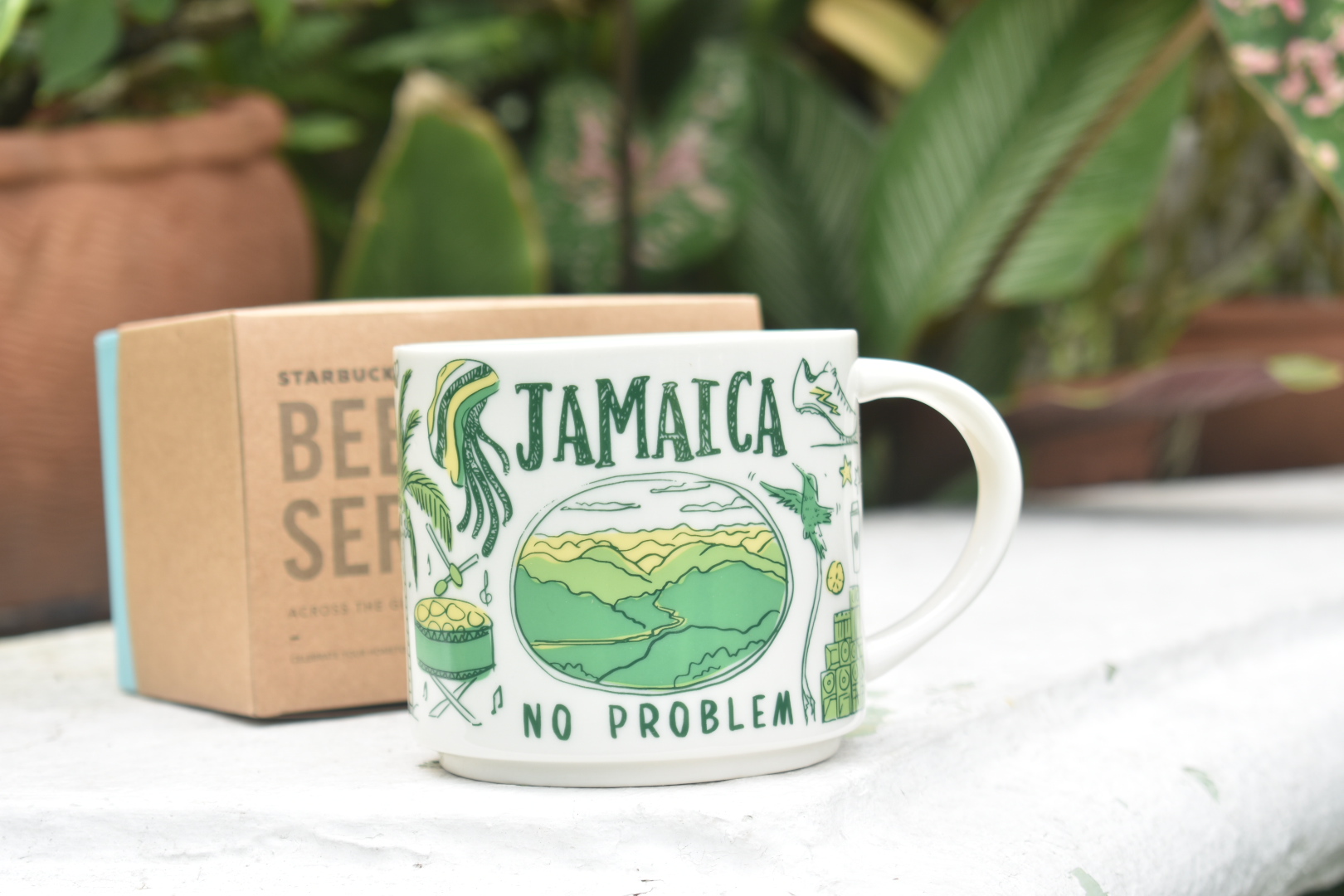
The only thing Jamaica based is its Been There Travel mugs.

Jamaica Coffee Exports Rise Amid Global Decline in Commodity Coffee

Jamaican coffee exports are bucking the global trend. Its rising when others commodity coffees are falling.

Jamaican coffee exports rose by 18 percent to US$27 million in 2023, up from US$23 million in 2022, that’s latest data from the UN Tradecen the bible of global trade.

This increase is especially significant in light of the challenges facing the global coffee industry, where major players like Colombia, Kenya, and Brazil have all reported declines in export volumes due to a mix of environmental and economic factors.

The United Nations’ trade data show that global coffee exports dropped from US$46 billion in 2022 to US$42 billion in 2023. Countries like Colombia saw a sharp one-third decrease, while Kenya and Brazil reported dips of 20 percent and 14 percent, respectively. These declines are largely attributed to unfavorable weather conditions, including droughts and floods, as well as ongoing economic uncertainty.

In contrast, Jamaica’s coffee sector, particularly its renowned Blue Mountain coffee, has remained resilient, bolstered by a strong demand for premium beans in key markets like Japan, the USA, and China. Japan remains Jamaica’s largest coffee importer, accounting for 50 percent of the country’s exports, followed by the USA and China.

Despite weather challenges and predictions that the 2024 crop may shrink, Jamaica’s coffee farmers have benefited from strategic shifts towards premium markets, a focus on quality, and the growing trend among consumers to support small-batch and ethically sourced coffee.

While other major coffee-producing regions continue to struggle, Jamaica’s coffee industry appears to be on a path of sustained growth, positioning itself as a unique player in the high-end segment of the global coffee market.

New players in Jamaica coffee offering cheaper deals in 2019

So more good news for buyers. When the mist of microclimate clears, new players are seen offering deals for their brands. They hype their beans as the best from the Jamaica Blue Mountain. Yeah so does everyone, yet some coffees taste ordinary and others amazing.

New players in the retail scene include Bawk Coffee, Plantation Blue and one can even say Stoneleigh.

These players all were involved in various aspects of the established trade and broke away to form their own brand. The more players means more competition in the sector which prides itself on a grandfather-taste which predates Starbucks and of course thirdwave.

This taste is distinct and offers amazing coffee without the bells of whistles of modern coffees. JBM (Jamaica Blue Mountain) is just layered-complexity without the hype.

So of course competition led to price cuts of between 10 to 20 per cent on shelves and on selling platforms like ebay and so on. In fact Stoneleigh actually slashed their retail rates by about 30 per cent just to move volumes. Let’s see what happens on reorders.

The context however is that coffee prices in Jamaica have started to fall back in 2016/17 based on global supply and demand factors. But now come 2019 its competition that’s driving the dip at the roasted bean level. What does this mean for consumers… more choice at cheaper prices.

But of course, we all know you can’t just buy JBM blindly.  That’s why its important to know your source. We find that all the new brands offer quality but we’d recommend getting someone whether at the brand or a broker to cup it first prior to shipment.

Cheers to great coffee!

chemex drum 6


Japan needs lower Jamaica coffee prices

Jamaica Blue Mountain (JBM) coffee dealers are now in Japan (late September) seeking to secure new contracts. Japan is a mature market that buys 85 per cent of the total JBM crop. So any new contract secured would likely mean that another player lost marketshare.

Japan loves JBM but its not exactly selling like rice cakes. So reports are that the inventory of JBM is growing.

As a result Japan buyers wants a lower price for the JBM. And they are likely to get it, as supply now outpaces demand. In other words there’s a lot of beans going around.

Whatever happens in Japan affects the world. So that means that you–the reader on Jamaicamocha will reap cheaper prices on luxury roasted beans. Want even lower prices contact us and we will make it happen.


Steven Beans

info@jamaicamocha.com


Starbucks confirms Jamaica 

(May 4, 2017) –  Starbucks Coffee Company today announced it entered a geographic licensing agreement with Caribbean Coffee Traders Limited, a consortium led by Margaritaville Caribbean Group, a leading restaurant management and franchise operator in the Caribbean. The agreement grants Caribbean Coffee Traders the exclusive rights to own and operate Starbucks® stores in the country. Jamaica will be Starbucks 17th market in the Latin America and Caribbean region, with the first store slated to open in Montego Bay.

“Jamaica is a country blessed with a rich culture and heritage, particularly with its locally-grown and world renowned Blue Mountain coffee, which Starbucks has sourced as a specialty offering for over 40 years,” said Ricardo Rico, Starbucks general manager and vice president for Latin America operations. “We are delighted to build on this legacy and continue our expansion into the Caribbean by introducing the Starbucks Experience in Jamaica for the first time. As we position the brand for continued growth, we are proud to add Caribbean Coffee Traders to our strong network of licensing partners and leverage their proven market capabilities to reach new customers.”

Starbucks® stores in Jamaica will be operated by Caribbean Coffee Traders Limited, a joint venture between Ian Dear, Chief Executive Officer of Margaritaville Caribbean Group and Adam Stewart, who is also Deputy Chairman and Chief Executive Officer of Sandals Resorts International. Margaritaville Caribbean Group currently operates restaurant, entertainment and tour concepts throughout the Caribbean, and provides complete, multi-branded food and beverage experiences for major Caribbean tourism hubs. Margaritaville Caribbean Group’s brand portfolio includes a diverse collection of proprietary brands, international franchises, casual dining concepts, themed bars and popular quick service restaurants, including Wendy’s, Dominos, Dairy Queen, Quiznos, Auntie Annie’s, Cinnabon, Moe’s Southwest Grill and Nathan’s. The group employs over 1,000 people throughout the region.

“We are thrilled to welcome Starbucks, a globally recognized brand, to Jamaica. Leveraging our knowledge of the local market, we will deliver upon the Starbucks Experience and create a global platform for Jamaica’s locally-grown and Blue Mountain© coffee.” said Ian Dear, Chief Executive Officer of Margaritaville Caribbean Group. “Our organizations share similar values, including our dedication to the customer experience, commitment to our crew members, and responsible corporate citizenship.”

For more than 45 years, Starbucks has built its brand by delivering a consistent, authentic in-store experience to customers around the globe that is rooted in high-quality arabica coffee and engaged, knowledgeable baristas. Since launching the brand in Latin America, Starbucks has grown to over 1,000 stores across 16 markets, 15 of which are operated by trusted licensing partners. In the Caribbean, Starbucks licensees currently operate 43 stores across Aruba, the Bahamas, Curacao, Puerto Rico, and most recently, Trinidad and Tobago. Jamaica will become the company’s sixth market in the Caribbean region. 


Avoid fake Jamaica coffee 


wallenford estate feb 2014 2

Avoid fake or bad tasting Jamaican coffee by knowing what’s the best Jamaican coffee from a ranking list . These are 100% Jamaica Blue Mountain.

Most times these official brands are great but quality can slightly vacillate based on the crop. Good news however is that more coffee lovers are entering the field. This leads to sites like ours, that curate quality beans  on a monthly basis from trusted brands. So it reduces the risk to the consumer. 

Fake Jamaican coffee however tries to pass as real in a number of ways. The primary method involves mixing beans from other regions outside the Blue Mountains. While blending can be legal it must be called a ‘Jamaica blue mountain blend’. Some corrupt dealers will pass them off as 100 per cent Jamaica Blue Mountain (JBM). 

There’s no way to easily tell if the beans are mixed from outside the Blue Mountains. You can however easily tell if the beans are inferior: The contents have two distinct sizes of beans. Uneven roasts. A number damaged or chipped beans. Lack of chocolate or nut in taste. Bitterness and other taste imperfections.

JBM usually sells for $25 per 8oz plus shipping. So JBM at $10-15 per 8oz is probably fake. No one would buy a new BMW for $9,000, no one would trust it. Yet people risk their senses and health by purchasing cheap bulk coffee.

True JBM should be balanced with complex levels of flavour and no bitterness. 

Avoid bad coffee by knowing great coffees and stick to them. Test brands you are not familiar with in small quantities and compare to established brands you know.