Arabica coffee trending to decaf

What Would Happen if the most popular coffee bean–Arabica, became decaf? Science fiction today, but likely reality in your great grandchildren’s lifetime.

Imagine a world where everyone is sipping decaf. The thought alone could make even the calmest coffee lover feel jittery (ironically). After all, decaf doesn’t quite pack the punch of its caffeinated cousin. It’s like coffee’s less fun sibling, the one that shows up to the party but doesn’t dance. And why is that? Decaf is stripped of most of its caffeine through processes like washing the beans with solvents, water, or carbon dioxide. Unfortunately, this also tends to rinse away the rich flavors, leaving behind something that resembles “coffee,” but in the same way a photocopy resembles a masterpiece.
However, what if this decaffeination trend was already underway in the coffee world itself, and not by choice? Enter Arabica coffee, the favorite bean of the coffee-drinking world. Known for its smooth, balanced flavor, Arabica is often the bean of choice for discerning coffee drinkers. But here’s the kicker: Arabica beans are gradually weakening in caffeine content, thanks to climate change.

Arabica plants are highly sensitive to changes in temperature, pests, and soil quality. Rising global temperatures are pushing these plants out of their ideal growing zones. As a result, they’re producing beans with less caffeine. To make things worse, pests like the coffee borer beetle, which thrive in warmer climates, are attacking Arabica crops, further reducing the health of the plants and, consequently, the caffeine in the beans.

Now, let’s imagine a world where Arabica completely dominates the coffee market—say goodbye to the more caffeine-packed Robusta beans. If Arabica continues to lose caffeine at a hypothetical rate of 0.5% per year (totally made-up but plausible), then by the year 2264, Arabica lovers would essentially be drinking decaf without realizing it! That’s right—your descendants might sit down at a café, take a sip of their favorite brew, and wonder why they feel sleepy instead of buzzed.

In a world ruled by weak Arabica beans, we might see the rise of alternatives—genetically modified super-caffeinated beans, perhaps, or a switch to synthetic caffeine boosters. But until then, we should savor the rich, caffeinated goodness of coffee while we can because, one day, it might just be a shadow of its former self.

AI generated article built on Jamaicamocha parameters and queries.

Blue Mountain vs. High Mountain: The Growing Divide in Jamaican Coffee

Coffee Farmers Struggling to Cultivate Non-Blue Mountain Crops

Kingston, Jamaica – Jamaican coffee farmers, particularly those cultivating non-Blue Mountain varieties, are facing increasing challenges that threaten their livelihoods. Despite a recent surge in overall coffee production, the disparity in prices and support for Blue Mountain and non-Blue Mountain farmers has widened.

The Blue Mountain range stretches along the eastern side of the island, while coffee from the High Mountain region (also known as non-Blue Mountain) is primarily produced in the central and western parts. Quality Blue Mountain offers coffee lovers a complex flavor profile with notes of spice, chocolate, and fruit, while High Mountain coffee typically has a more intense chocolate and spice flavor with a slight bitterness. Despite the higher quality and premium price of Blue Mountain coffee, the challenges faced by farmers in both regions are significant.

Difficult farm access on steep slopes, high fertilizer costs, farm theft, diseases, and the changing climate make farming Blue Mountain coffee a risky venture. Many farmers are struggling to make a profit, even with the higher prices. “They want us to plant more beans, but it just doesn’t make any sense most of the time,” said the head of Middleton Cafe in the Blue Mountains.

The price disparity between Blue Mountain and non-Blue Mountain coffee is evident at the consumer level as well. A cup of Blue Mountain coffee can cost up to $3.50 at Middleton Cafe, while a cup of High Mountain coffee at Smurfs Cafe in Treasure Beach is only $1.00.

According to the Planning Institute of Jamaica, while Blue Mountain cherry coffee production increased by 16.2%, non-Blue Mountain cherry coffee production declined by 1.3%. This trend can be attributed to several factors, including the higher prices offered for Blue Mountain coffee, which incentivizes farmers to focus on this more lucrative crop.

The recent increase in Blue Mountain prices has further exacerbated the economic divide between farmers. The average farm gate price for Blue Mountain cherry coffee has risen to $367,433.3 per tonne (or roughly US$2,450 per tonne), while non-Blue Mountain cherry coffee remains at $119,415.8 per tonne (about US$800 per tonne).

This price disparity has led many non-Blue Mountain farmers to abandon their crops in favor of more profitable alternatives. The decline in non-Blue Mountain production is not only a loss for these individual farmers but also a blow to the country’s agricultural diversity and the overall economy.

Efforts to address this issue include providing targeted support to non-Blue Mountain farmers, such as technical assistance, improved access to markets, and potentially higher subsidies. Additionally, exploring new markets for non-Blue Mountain coffee and promoting its unique qualities can help to increase demand and improve prices.

Crisis isn’t new to coffee. Below is a timeline from before the pandemic.

Why Starbucks in Jamaica Doesn’t Sell Jamaican Coffee

Years after Starbucks recommitted itself to incorporate Jamaican coffee into its local offerings, the reality tells a different story.

Walk into any Starbucks store in Jamaica today, and one thing is constant: it does not sell Jamaican coffee. This contradicts the very intention of its entry into the market back in 2017 and its recommitment to offer local beans in 2020.

At the time of Starbucks’ expansion into Jamaica, the company expressed excitement about using local Blue Mountain and High Mountain coffee varieties. As local franchise holder and businessman Ian Dear noted, “Starbucks has proudly sourced Jamaican Blue Mountain coffee since the early days of its operations…and it continues to be a key feature in the Starbucks Reserve line of small-lot coffees in the U.S. and select international markets”.

When Starbucks first entered Jamaica, it briefly offered local coffee during its first year, albeit at prices nearly double those of supermarket brands. The challenge, however, lay in sourcing quality beans at a competitive price.

Compounding the problem, all the beans were shipped to Seattle for roasting and bagging, only to be shipped back to Jamaica. This process made local coffee prohibitively expensive for the Jamaican market.

Despite the initial excitement, none of the Starbucks locations in Jamaica currently offer Jamaican-grown coffee. This missed opportunity has been a disappointment for the local coffee industry, which had hoped that Starbucks’ presence would lead to increased international exposure and local job creation. Instead, Jamaican farmers and stakeholders are left questioning the unfulfilled promises, as Starbucks continues to rely on imported coffee, leaving its local varieties absent from the menu. The goal of supporting the Jamaican economy and promoting its world-renowned coffee remains unrealized.

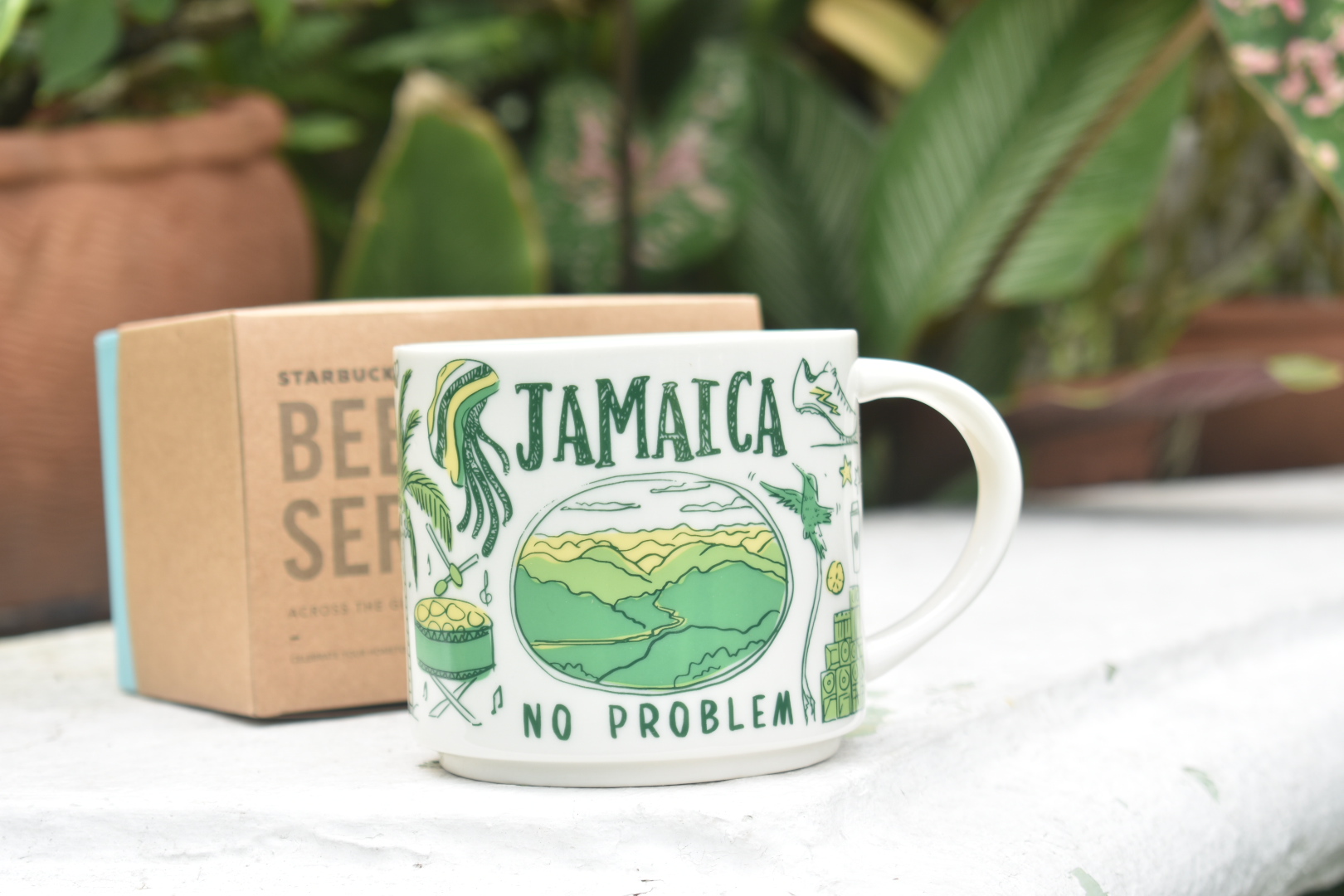
The only thing Jamaica based is its Been There Travel mugs.

Jamaica Coffee Exports Rise Amid Global Decline in Commodity Coffee

Jamaican coffee exports are bucking the global trend. Its rising when others commodity coffees are falling.

Jamaican coffee exports rose by 18 percent to US$27 million in 2023, up from US$23 million in 2022, that’s latest data from the UN Tradecen the bible of global trade.

This increase is especially significant in light of the challenges facing the global coffee industry, where major players like Colombia, Kenya, and Brazil have all reported declines in export volumes due to a mix of environmental and economic factors.

The United Nations’ trade data show that global coffee exports dropped from US$46 billion in 2022 to US$42 billion in 2023. Countries like Colombia saw a sharp one-third decrease, while Kenya and Brazil reported dips of 20 percent and 14 percent, respectively. These declines are largely attributed to unfavorable weather conditions, including droughts and floods, as well as ongoing economic uncertainty.

In contrast, Jamaica’s coffee sector, particularly its renowned Blue Mountain coffee, has remained resilient, bolstered by a strong demand for premium beans in key markets like Japan, the USA, and China. Japan remains Jamaica’s largest coffee importer, accounting for 50 percent of the country’s exports, followed by the USA and China.

Despite weather challenges and predictions that the 2024 crop may shrink, Jamaica’s coffee farmers have benefited from strategic shifts towards premium markets, a focus on quality, and the growing trend among consumers to support small-batch and ethically sourced coffee.

While other major coffee-producing regions continue to struggle, Jamaica’s coffee industry appears to be on a path of sustained growth, positioning itself as a unique player in the high-end segment of the global coffee market.

Why Jablum Gold made with Jamaica peaberry coffee beans are rare

Jablum Gold is made of beans from the Jamaica Blue Mountains. These beans are not only handpicked on the farms, they are also curated in the factories to get the fattest beans and best taste. So no boudbr it’s made in low quantities.

Add peaberries which are made from 1 in every 10 beans on average, then add the duration process and you get an exceedingly rare Jablum Gold peaberries.

This coffee plays its part offering theatre from unpacking the beans, inspecting its pea like nature, smelling, then cupping.

Essentially it makes a great cup for the holidays. The tones are traditional chocolate and spice, but the peaberries give it a crisp tealike fruitiness and smoothness.

https://www.etsy.com/listing/515150216/jamaica-blue-mountain-coffee-8-oz-x-1

Brands to expect at Jamaica coffee festival 2019

The Jamaica Blue Mountain Coffee festival 2019 takes place in the hills of the world renowned Blue Mountain this weekend. Everyone will congregate on historic grounds in Newcastle but what brands will come out in full force.

Expect all the large ones including Jablum, Wallenford, Coffee Traders, Country Traders, Jamaica Standard Products, and so on.

In terms of cafe popups expect Cannonball, Cafe Blue, Jablum & Wallenford, Coffee Roasters, Island Blue and of course Starbucks and more.

People should be most excited about the surprises: The smaller brands coming out in force to increase marketability and exposure such as Plantation Blue and Bawk coffee.  But we shall see this weekend at the coffee festival.

The festival under the patronage of the Ministry of Tourism aims to get locals and foreigners to experience three days of Jamaican food, coffee and culture along the Blue Mountain Culinary Trail. There will also be indigenous arts and crafts showcases, live Reggae music performances and tours to some of Jamaica’s best kept secrets.

Can’t be there but want to experience quality coffee. There’s always next year.

Click to buy

jablum gold 4


Jamaica coffee experient

Some coffee companies in the island are innovating. They want to expand the definition of great coffee to include a more fruity taste profile instead of preponderance of chocolate tones. No one will go on the record but expect options that are bursting with fruit to hit shelves within the medium term.

🙂