A double espresso and sex improves your grind, study says

Study Finds Coffee May Help Men Achieve Longer Erections

Recent studies suggest that coffee consumption might improve erectile function in men, leading to longer-lasting erections. Research conducted by the University of Texas Health Science Center found that men who consume the equivalent of two to three cups of coffee daily are less likely to experience erectile dysfunction (ED). The caffeine in coffee helps relax the arteries and smooth muscle tissue within the penis, enhancing blood flow. Improved blood circulation is a critical factor in achieving and maintaining an erection, which explains why moderate coffee consumption could offer benefits in the bedroom.

According to the study, men who consumed between 85 and 170 milligrams of caffeine daily experienced a 42% lower chance of erectile dysfunction compared to those who consumed little to no caffeine. Even men who consumed slightly more (up to 170-303 milligrams per day) showed a 39% reduction in ED risk. Caffeine’s ability to increase blood flow through vasodilation, coupled with its stimulation of the nervous system, can improve erectile performance, according to experts.

Other research also supports this link between caffeine and improved sexual function. In a 2015 study published in PLoS One, researchers found that men who consumed moderate amounts of caffeine each day were less likely to report issues with erectile function, regardless of their weight or age.

While the studies are promising, it’s important to note that caffeine is not a substitute for medically recommended treatments for erectile dysfunction. Lifestyle factors, including overall cardiovascular health and stress levels, also play significant roles in sexual performance.

The findings offer new insight into how a daily cup of coffee may not just boost energy but also improve men’s sexual health. However, moderation is key, as excessive caffeine can lead to other health complications, such as anxiety and heart issues.
Arabica coffee trending to decaf

What Would Happen if the most popular coffee bean–Arabica, became decaf? Science fiction today, but likely reality in your great grandchildren’s lifetime.

Imagine a world where everyone is sipping decaf. The thought alone could make even the calmest coffee lover feel jittery (ironically). After all, decaf doesn’t quite pack the punch of its caffeinated cousin. It’s like coffee’s less fun sibling, the one that shows up to the party but doesn’t dance. And why is that? Decaf is stripped of most of its caffeine through processes like washing the beans with solvents, water, or carbon dioxide. Unfortunately, this also tends to rinse away the rich flavors, leaving behind something that resembles “coffee,” but in the same way a photocopy resembles a masterpiece.

However, what if this decaffeination trend was already underway in the coffee world itself, and not by choice? Enter Arabica coffee, the favorite bean of the coffee-drinking world. Known for its smooth, balanced flavor, Arabica is often the bean of choice for discerning coffee drinkers. But here’s the kicker: Arabica beans are gradually weakening in caffeine content, thanks to climate change.

Arabica plants are highly sensitive to changes in temperature, pests, and soil quality. Rising global temperatures are pushing these plants out of their ideal growing zones. As a result, they’re producing beans with less caffeine. To make things worse, pests like the coffee borer beetle, which thrive in warmer climates, are attacking Arabica crops, further reducing the health of the plants and, consequently, the caffeine in the beans.

Now, let’s imagine a world where Arabica completely dominates the coffee market—say goodbye to the more caffeine-packed Robusta beans. If Arabica continues to lose caffeine at a hypothetical rate of 0.5% per year (totally made-up but plausible), then by the year 2264, Arabica lovers would essentially be drinking decaf without realizing it! That’s right—your descendants might sit down at a café, take a sip of their favorite brew, and wonder why they feel sleepy instead of buzzed.

In a world ruled by weak Arabica beans, we might see the rise of alternatives—genetically modified super-caffeinated beans, perhaps, or a switch to synthetic caffeine boosters. But until then, we should savor the rich, caffeinated goodness of coffee while we can because, one day, it might just be a shadow of its former self.

AI generated article built on Jamaicamocha parameters and queries.

Blue Mountain vs. High Mountain: The Growing Divide in Jamaican Coffee

Coffee Farmers Struggling to Cultivate Non-Blue Mountain Crops

Kingston, Jamaica – Jamaican coffee farmers, particularly those cultivating non-Blue Mountain varieties, are facing increasing challenges that threaten their livelihoods. Despite a recent surge in overall coffee production, the disparity in prices and support for Blue Mountain and non-Blue Mountain farmers has widened.

The Blue Mountain range stretches along the eastern side of the island, while coffee from the High Mountain region (also known as non-Blue Mountain) is primarily produced in the central and western parts. Quality Blue Mountain offers coffee lovers a complex flavor profile with notes of spice, chocolate, and fruit, while High Mountain coffee typically has a more intense chocolate and spice flavor with a slight bitterness. Despite the higher quality and premium price of Blue Mountain coffee, the challenges faced by farmers in both regions are significant.

Difficult farm access on steep slopes, high fertilizer costs, farm theft, diseases, and the changing climate make farming Blue Mountain coffee a risky venture. Many farmers are struggling to make a profit, even with the higher prices. “They want us to plant more beans, but it just doesn’t make any sense most of the time,” said the head of Middleton Cafe in the Blue Mountains.

The price disparity between Blue Mountain and non-Blue Mountain coffee is evident at the consumer level as well. A cup of Blue Mountain coffee can cost up to $3.50 at Middleton Cafe, while a cup of High Mountain coffee at Smurfs Cafe in Treasure Beach is only $1.00.

According to the Planning Institute of Jamaica, while Blue Mountain cherry coffee production increased by 16.2%, non-Blue Mountain cherry coffee production declined by 1.3%. This trend can be attributed to several factors, including the higher prices offered for Blue Mountain coffee, which incentivizes farmers to focus on this more lucrative crop.

The recent increase in Blue Mountain prices has further exacerbated the economic divide between farmers. The average farm gate price for Blue Mountain cherry coffee has risen to $367,433.3 per tonne (or roughly US$2,450 per tonne), while non-Blue Mountain cherry coffee remains at $119,415.8 per tonne (about US$800 per tonne).

This price disparity has led many non-Blue Mountain farmers to abandon their crops in favor of more profitable alternatives. The decline in non-Blue Mountain production is not only a loss for these individual farmers but also a blow to the country’s agricultural diversity and the overall economy.

Efforts to address this issue include providing targeted support to non-Blue Mountain farmers, such as technical assistance, improved access to markets, and potentially higher subsidies. Additionally, exploring new markets for non-Blue Mountain coffee and promoting its unique qualities can help to increase demand and improve prices.

Crisis isn’t new to coffee. Below is a timeline from before the pandemic.

Crunchy affogato

Crunchy Affogato


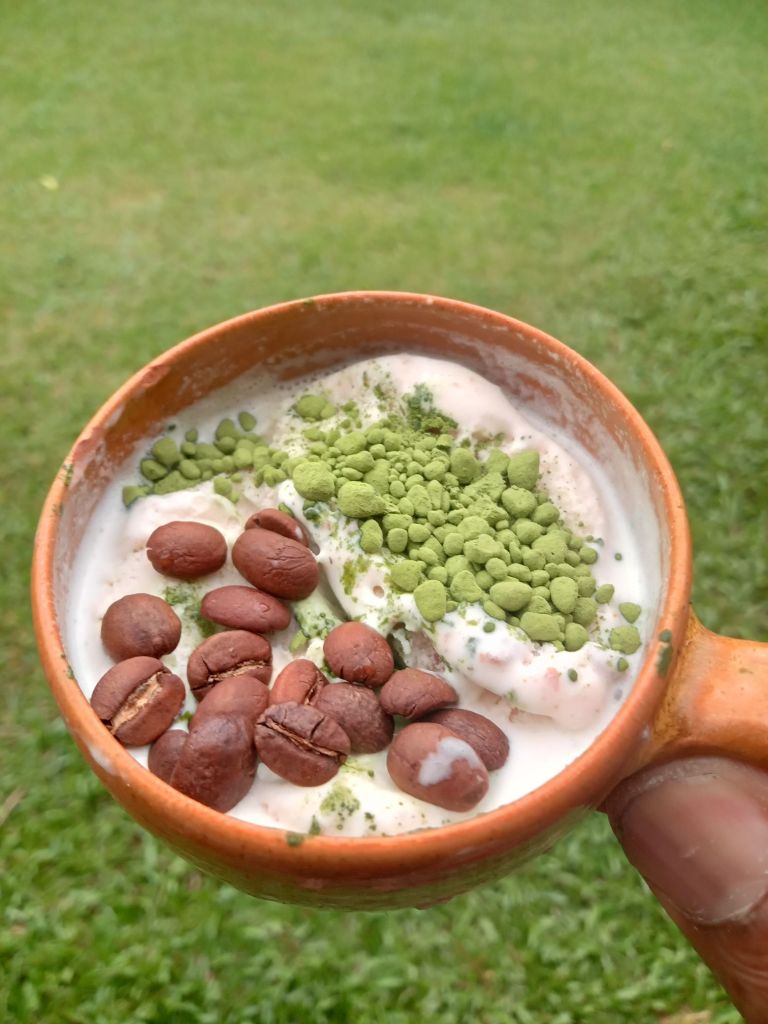
Imagine a dessert that seamlessly blends  earthy matcha with bold  coffee beans.

Introducing the Matcha Coffee Crunch, a unique ice cream treat that combines the best of both worlds. It’s a crunchy affogato.


Start with a scoop of creamy vanilla grapenut ice cream. Drizzle it generously with a matcha, crafted from finely ground green tea leaves. The matcha adds a vibrant green hue and a subtle, grassy sweetness. Next, throw some fresh coffee beans.

Great contrast of textures. And a deep, roasted aroma.

French press coffee back to earth

DSC_0029

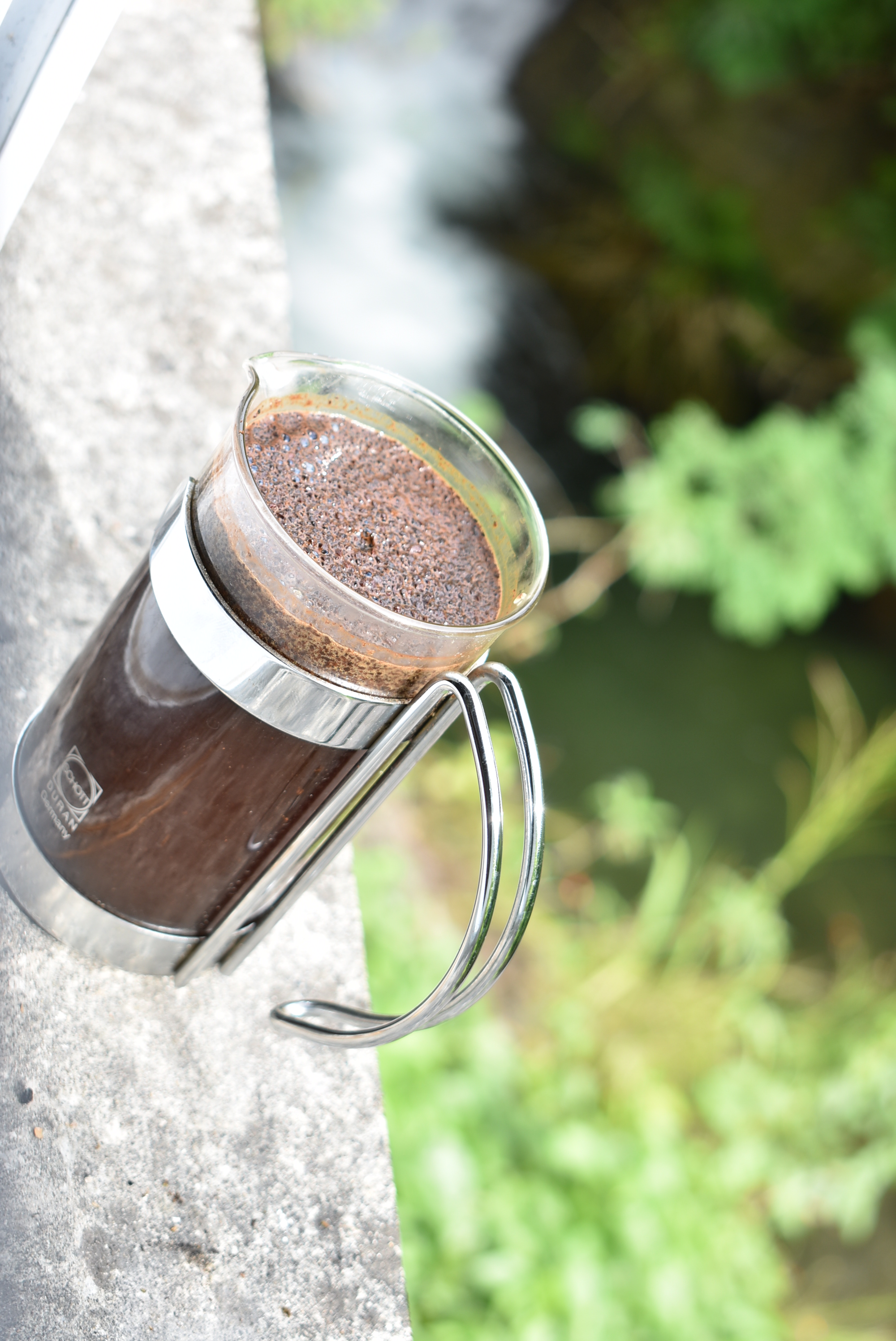
Brewing with a coffee-press, known also as a french press or coffee pot, will offer an earthy brew in contrast to a pour over or percolator. The press will keep the oils and the full body flavor in every cup. The pour-over, led by minimalist styling of a Chemex, on the other hand, will enhance the brightness and fruitiness of the brew as it filters out much of the full body.

DSC_0005

For many, the preferred method of brewing depends on the flavours one wants to enchance. Coffee geeks wants drinkers to consider the ratio of coffee to water. Research advises drinkers that the ideal is a 1-to-14 or 1-to-15 mix. They speak about the type of water, the type of kettle, the weight of the coffee, the time to allow the coffee to seep. Everything except the coffee.

For many however coffee isn’t math but rather art. And while quality products are nice amenities, it is quality coffee that’s the most important. There are many ways to know quality coffee, an easy method involves avoiding bottom-shelf supermarket beans in favour of premium single estate coffee.

Regardless, at the crack of dawn, quality coffee remains the most important ingredient even above the brewing method.

coffee press

Japan needs lower Jamaica coffee prices

Jamaica Blue Mountain (JBM) coffee dealers are now in Japan (late September) seeking to secure new contracts. Japan is a mature market that buys 85 per cent of the total JBM crop. So any new contract secured would likely mean that another player lost marketshare.

Japan loves JBM but its not exactly selling like rice cakes. So reports are that the inventory of JBM is growing.

As a result Japan buyers wants a lower price for the JBM. And they are likely to get it, as supply now outpaces demand. In other words there’s a lot of beans going around.

Whatever happens in Japan affects the world. So that means that you–the reader on Jamaicamocha will reap cheaper prices on luxury roasted beans. Want even lower prices contact us and we will make it happen.


Steven Beans

info@jamaicamocha.com